Pineapple Red Curry

When we first got to Thailand, we couldn’t wait to learn how to make all the different curry pastes we see in the market. And once we did we couldn’t wait to tweak the recipes to make them whole-food friendly. That’s exactly what you’ll find here.
This recipe started as a fairly traditional pineapple curry recipe that we learned to make from Chef Nice, a very “nice” (I’m sure he hates that joke) Thai chef that led one of our cooking classes . Well, as traditional as a salt and fermented shrimp-free curry paste could be. The first iteration was delicious and rich, made with hand-squeezed coconut cream and milk, and consisted of just pineapple and carrot—my rogue addition. It was rich and delicious. The sweetness of the pineapple and silkiness of the coconut cream cooled the heat from the copious amounts of Thai chilis I added.
But we felt it was missing something.
Since we don’t add a “traditional protein” and since tofu accepts more flavor than it lends, the dish, while delicious, remained incomplete. It could be better and we were determined to tweak our way to something wonderful.
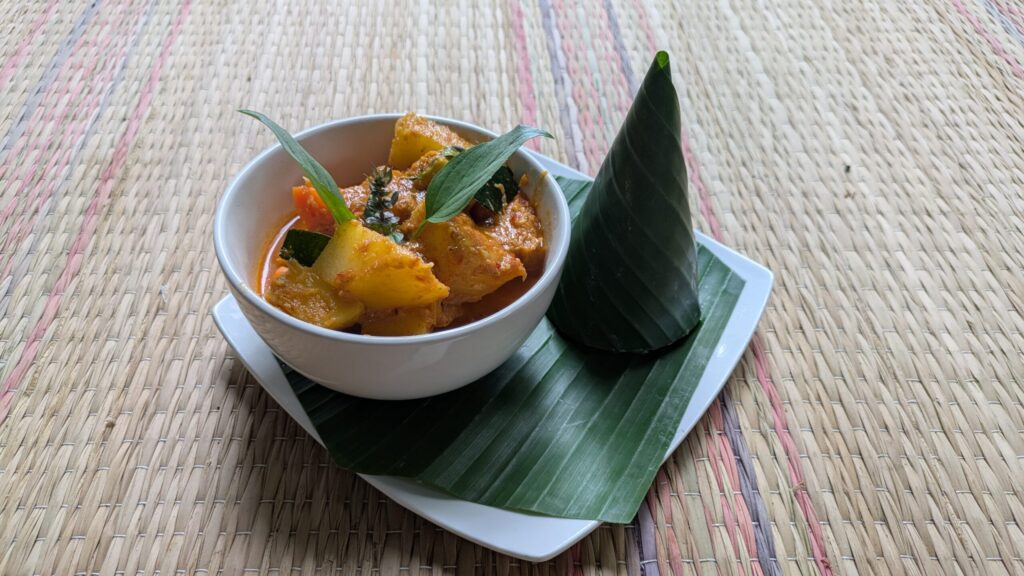
This got us thinking. How do we make it feel more like a meal—and less like spicy dessert—while also making it a tad less of a guilty pleasure and more something I could eat every day. Because believe me we wanted to eat it every day! Our solution was to address each objection we had head on.
Here’s what we knew. First, coconut milk is heavy. Aside from fat, meat adds a silkiness from the protein to broth that tofu does not. Third, we like the sweetness from the pineapple, but wanted to add more substance and nutrient diversity. Lastly, coconut milk breaks when you boil it, which makes the soup greasy.
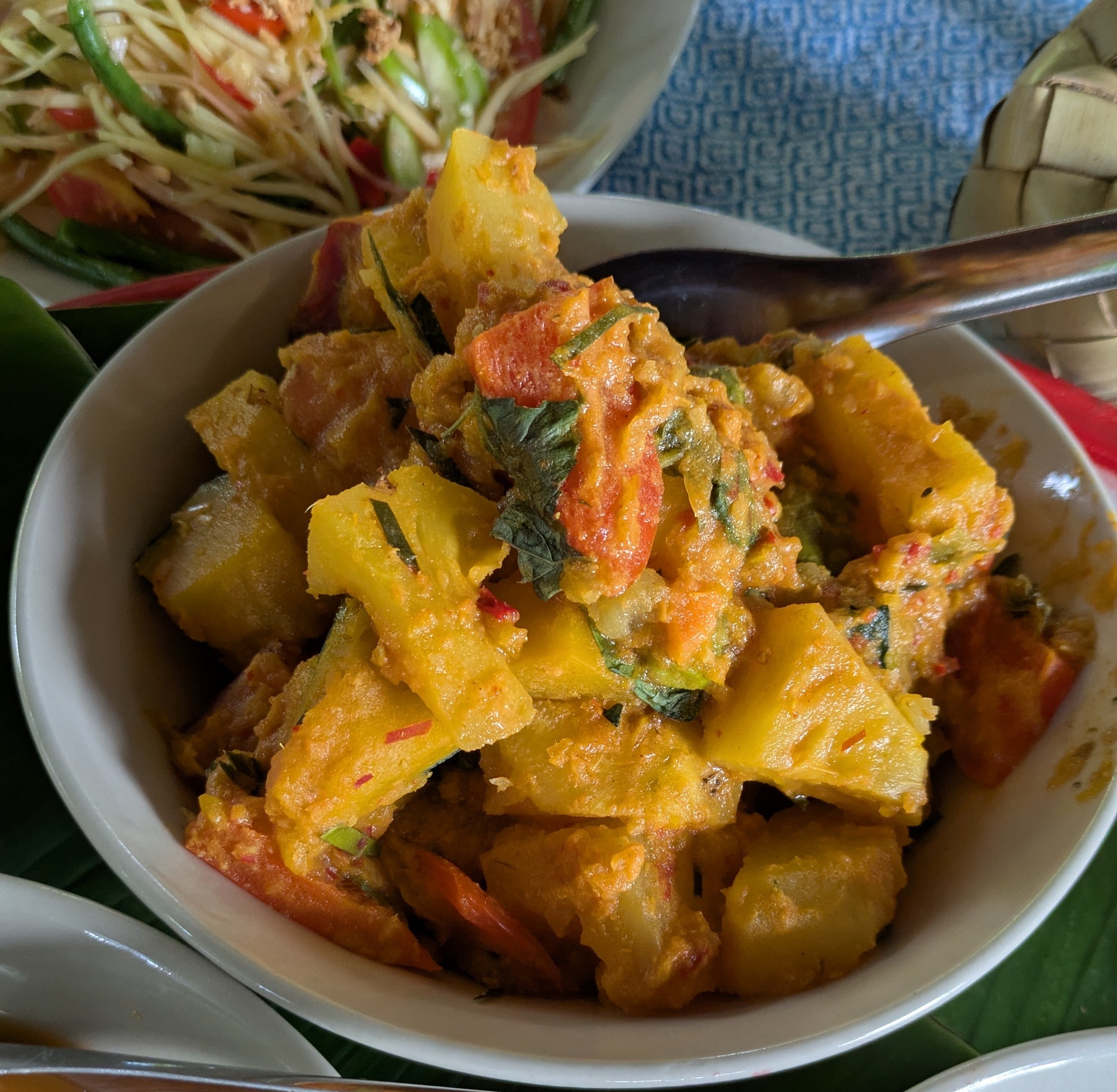
The solution was relatively simple. First, substitute fresh, homemade—because everything in the Thai cooking school is fresh and homemade—soy milk for coconut milk. This solved several of the issues because when you boil fresh soy milk it foams up, or should I say, the proteins foam up—meaning the end texture will have more of the body that, say, chicken would have lent. Additionally, soy is fatty, but not coconut fatty. And soy milk doesn’t break when you hard boil it—meaning we could be free to add heartier vegetables to the mix. Which brings us to the second part of the solution: more veggies! We settled on a combination of sweet and regular potatoes tropical pumpkin and red bell pepper—in addition to the pineapple, of course. 🙂
All together the result was hearty, not heavy, remained true to the original spirit of the dish while becoming something a whole-foodie can be proud to serve.
Ingredients
Equipment
Method
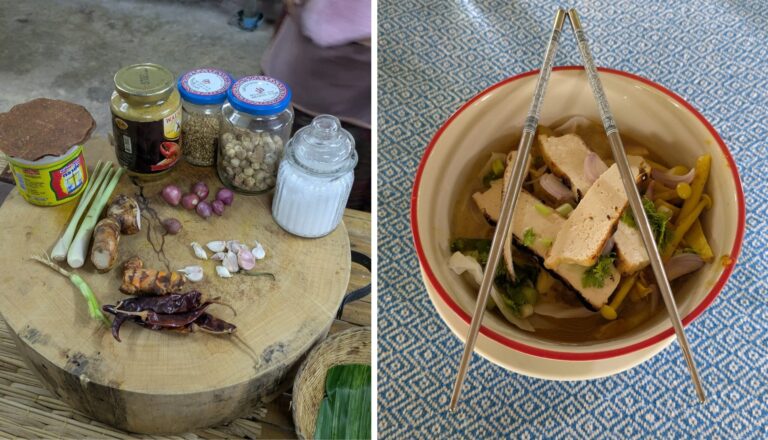
- Pound the spices into a powder, set aside.
- Chop the peppers and kaffir lime zest as small as you can. Pound; pound; pound.
- Smash and chop the garlic, leaving the cancer-fighting-skins on. Pound; pound; pound. The peppers should start to look like paste.
- Continue adding your finely diced (or smashed and diced, in the case of the lemongrass) curry paste ingredients in the order listed. Pounding until each ingredient is well incorporated before adding the next one.
- Pro tip: if your mortar is too small, start working in batches when you get to the shallots. They are adding the bulk of the moisture and will be the thing that rehydrates the peppers (fully) and spices.
- When it looks like curry paste, you're done. Congratulations. Set aside so it can rest.
- By hand – Soak the split soy beans over night. Take a tablespoon or so at a time and pound them in the mortar and pestle, adding water as you go and straining batches through a cheese cloth. You're going for 2 cups of thick milk, or 4 cups thin.
- By blender – Okay cheater – pop your soy beans in the blender with 4 cups of water and strain through cheesecloth. I haven't yet done it this way (cause my Blendtec is in storage, so my ratios are guesses.
- Aim for a concentration reminiscent of Westsoy soy milk. But DO NOT drink raw soy milk; at this stage judge the thickness only with your eyes, not your tongue.
- If your vegetables are unwaxed, leave the skins on. Yes, the pumpkin too. Otherwise peel the veggies.
- Chop the potato, sweet potato, and pumpkin into similarly sized cubes. Your call, it'll only impact how long it takes to cook, but I prefer 1-1½" cubes.
- Chop the red peppers into 1½" squares. And the pineapple similarly.
- Pick and roughly chop the Thai basil; chiffonade the kaffir lime leaves.
- Bring a little soy milk to boil and add the curry paste; let it come back to a boil, stirring frequently.
- Then add in the potatoes, sweet potatoes, and pumpkin with enough soy milk to almost cover. Let it boil until the veggies are 80% cooked.
- NOTE – The goal is to have the potatoes steam/cook while the sauce thickens down to a curry-like consistency, so don't start with too much soy milk. You can always add more later. If you think it's getting too rich, add water or salt-free vegetable broth instead of more soy milk. The ratio is really a judgement call based on how thick your soy milk came out. Just remember your homemade soy milk is raw, so you can't add it at the very end; it needs to cook.
- Add the peppers and pineapple. Cook until the potatoes are done.
- Take off the heat and add the Thai basil and kaffir lime leaves, stir to combine. Let rest 10-15 minutes so the sauce has time to thicken a little more thanks to the potato starch.